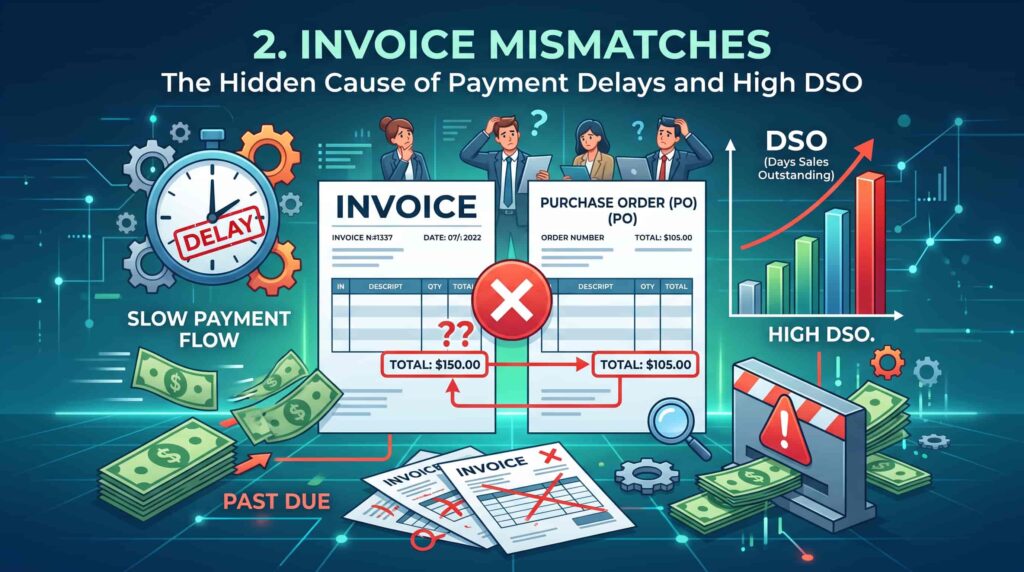
An invoice can be completely accurate from an accounting perspective and still encounter problems when it does not align with the customer’s purchase order, contract, pricing agreement, quantities, or payment terms. These mismatches can result in invoice rejection, customer disputes, additional investigation, delayed approvals, and ultimately slower payment.
For many finance teams, the problem is discovered only after an invoice has already been submitted. At that point, the AR team must investigate documents, communicate with internal departments or customers, determine the source of the discrepancy, and correct the issue. The longer this process takes, the longer cash remains tied up in receivables.
This article explores why upstream invoice validation is important for improving the invoice-to-cash process. It explains how comparing contracts, purchase orders, invoices, pricing, quantities, and terms before submission can help organizations identify potential problems earlier. It will also examine how AI-powered mismatch detection can support finance teams by highlighting discrepancies, reducing manual research, improving invoice accuracy, and helping prevent avoidable disputes before they affect collections. AR Sync’s Mismatch Intelligence is designed specifically around detecting these types of discrepancies before they impact cash flow.