
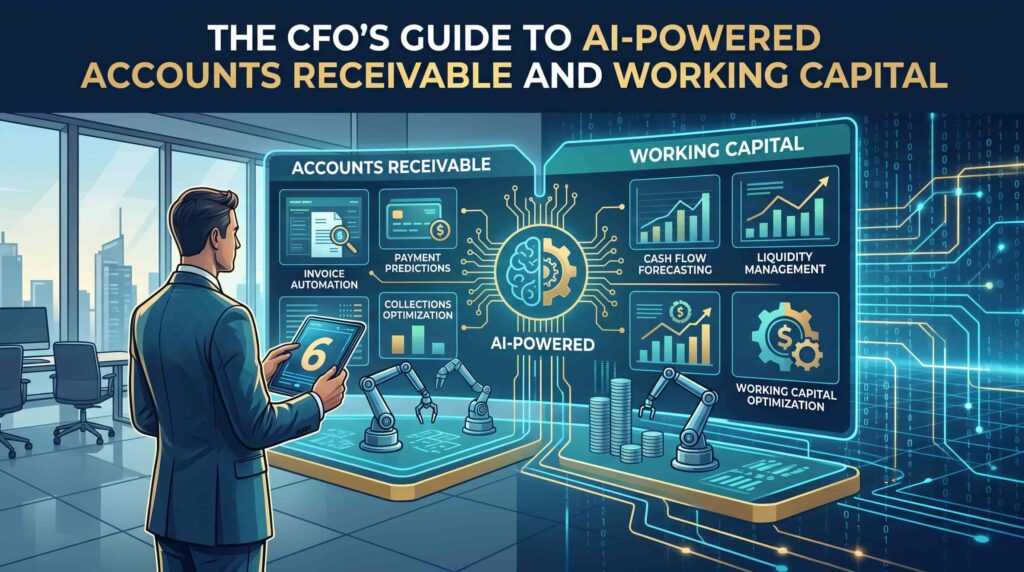
For CFOs and finance leaders, accounts receivable is closely connected to working capital, cash-flow visibility, financing costs, and the predictability of financial performance. When significant amounts of revenue remain tied up in receivables, organizations may have less flexibility to invest, manage expenses, or respond to changing business conditions.
Improving AR performance requires more than simply asking teams to follow up with customers more frequently. Finance leaders need visibility into why invoices are delayed, which disputes are affecting collections, where cash remains unapplied, and which accounts require attention. They also need reliable information that can support forecasting and financial decision-making.
This article provides a practical overview of how AI can support the CFO organization across the receivables lifecycle. It covers invoice accuracy, mismatch detection, dispute resolution, collections prioritization, cash application, real-time AR visibility, and financial data intelligence. It also considers important enterprise requirements such as data security, auditability, integration with existing ERP systems, governance, and human oversight. The article can help finance leaders understand where AI fits within a broader working-capital strategy and what questions to consider when evaluating an AI-powered AR platform.