
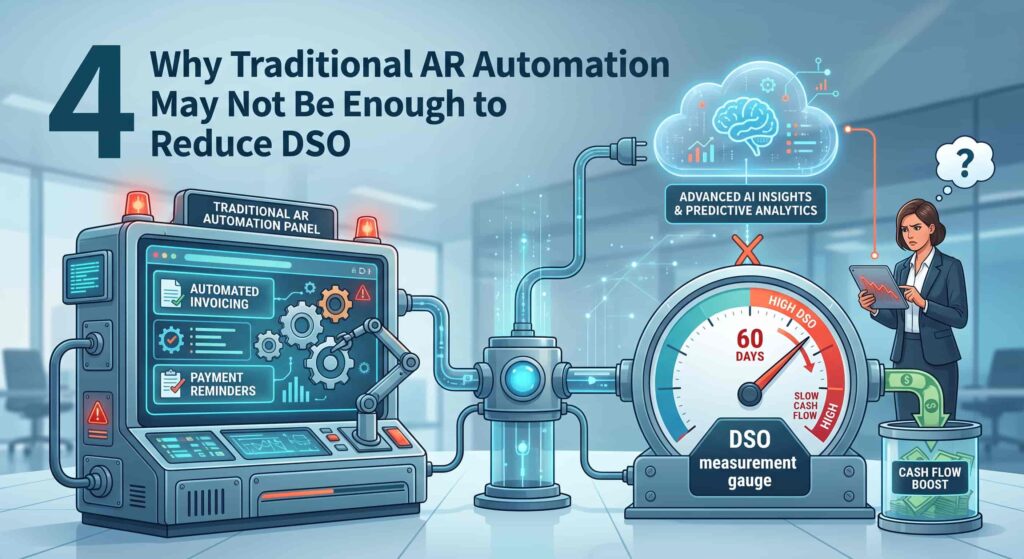
Many organizations have already invested in accounts receivable automation, yet finance teams can continue to experience high Days Sales Outstanding, recurring invoice disputes, manual account research, and unpredictable cash timing. The challenge may not simply be the amount of work being performed by the AR team. In some cases, delays begin earlier in the process through invoice errors, mismatched terms, incomplete documentation, or reactive follow-up.
Traditional automation is often designed to execute predefined workflows and repetitive tasks. While this can improve efficiency, complex AR environments also require systems to understand context, identify exceptions, connect information from different sources, and determine what should happen next.
This article examines the difference between task automation and more intelligent, context-aware AR operations. It explores how invoice validation, document intelligence, dispute detection, collections prioritization, cash application, and cross-system data can work together to address the underlying causes of delayed payments. The goal is to provide finance leaders with a practical framework for evaluating whether their current AR technology is addressing only individual tasks or supporting the broader invoice-to-cash process.